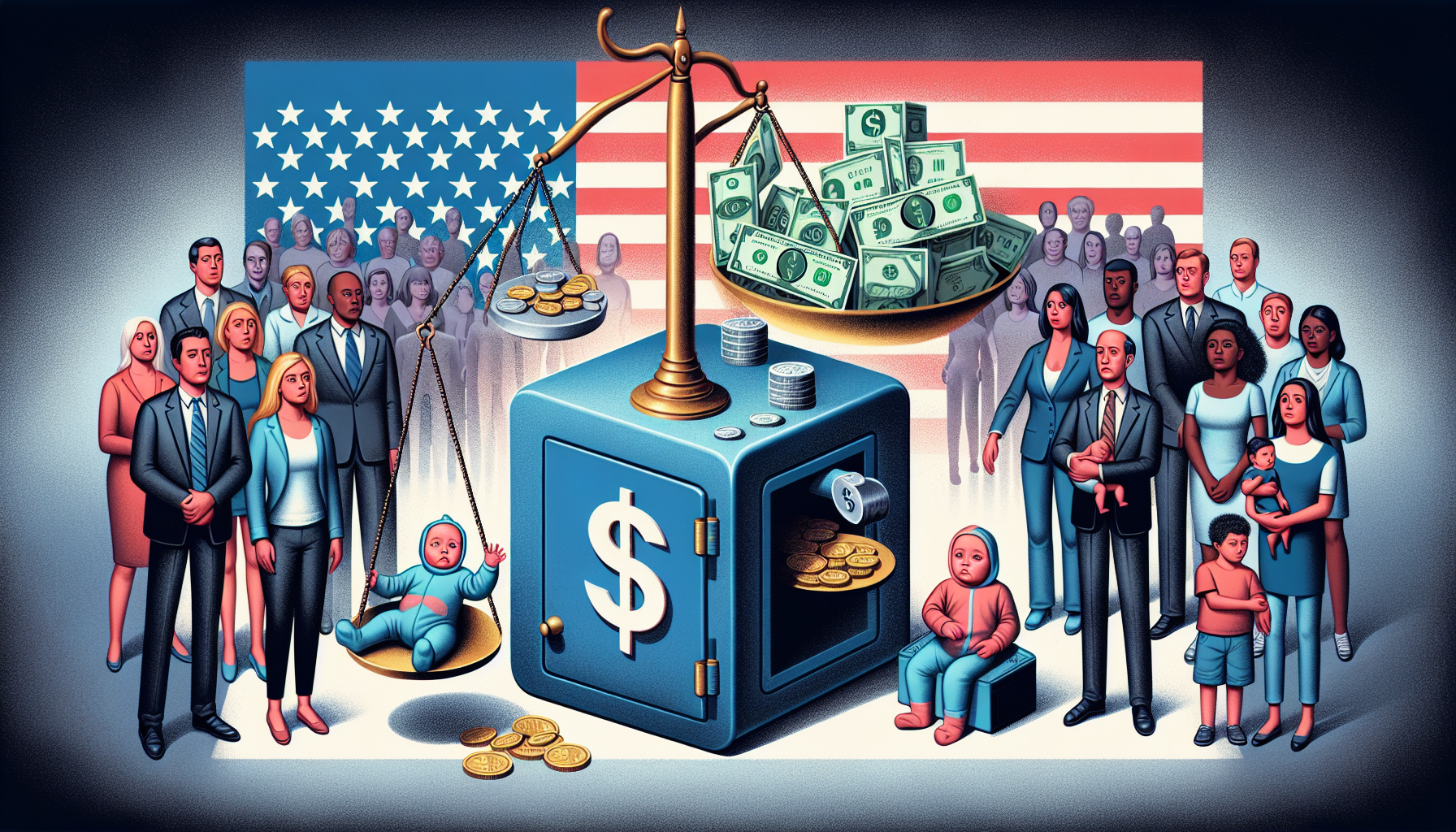
📌 Blog Title: Trump’s $1,000 Baby Investment Proposal—A Jumpstart or Just a Mirage for Low-Income Families?
In a world of widening wealth gaps and generational inequality, former President Donald Trump has proposed a bold policy that quickly caught national attention: creating $1,000 investment accounts for every baby born in the U.S. over the next four years. While it's being touted as a plan to help newborns get a “big jump on life,” critics argue that the proposal misses the mark for families struggling with day-to-day needs.
Let’s dive deep into what this policy means, why it's sparking a heated debate, and whether this is a genuine solution—or just a political headline grab.
🗂 Table of Contents:
- What Is the $1,000 Baby Investment Proposal?
- Intended Benefits: What Trump Claims
- The Critics' Perspective: Why Some Say It’s Flawed
- Understanding Economic Inequality in the U.S.
- Real-Life Examples: What $1,000 Means for Different Families
- Could A Program Like This Actually Work?
- What Financial Experts Are Saying
- The Bottom Line: Investment vs. Immediate Impact
🍼 1. What Is the $1,000 Baby Investment Proposal?
The proposed policy aims to create tax-deferred investment accounts for every child born in the United States during the next four years. Each account would start with a $1,000 deposit from the federal government. These accounts are intended to grow over time, giving future Americans a small nest egg as they transition into adulthood.
In simple terms: the government invests $1,000 for every baby in hopes that by age 18, that investment will grow—potentially providing a little financial leg up.
📈 2. Intended Benefits: What Trump Claims
According to the proposal, the primary goal is to reduce wealth inequality by giving all children a chance to start adulthood with money in their pockets. It’s based on the idea of compound interest—if invested in the stock market or a retirement-style fund, this $1,000 could potentially grow several times over by the time the baby turns 18 or 21.
Supporters also argue that it promotes financial literacy, encourages savings culture from birth, and provides a pathway to future investments in college education, entrepreneurship, or homeownership.
Trump himself stated this would “give Americans a BIG jump on life.”
🚫 3. The Critics' Perspective: Why Some Say It’s Flawed
Critics, including economists and child advocacy groups, say the policy is fundamentally tone-deaf to the urgent issues many low-income Americans face.
⛔ A few of the key concerns:
- Many families can't afford basic necessities now. $1,000 locked in an account for 18 years does nothing to help families struggling with rent, food, or childcare in 2024.
- Investing assumes an individual will grow up financially literate and that funds will be responsibly managed—a big assumption for children who may not have access to that guidance.
- It's a long-term solution for a short-term crisis.
In other words, it sounds good on paper but may do little for the poverty families are experiencing today.
📊 4. Understanding Economic Inequality in the U.S.
To grasp why this policy is both interesting and controversial, we need to talk about the numbers:
According to U.S. Census Bureau data:
- Over 12 million children live in poverty.
- 1 in 3 households reported difficulty affording housing or groceries in the last year.
- The average net worth of a white family is nearly 10x greater than that of a Black family.
For many families, a $1,000 future account won't offset the structural economic disadvantages they face daily.
📍 5. Real-Life Examples: What $1,000 Means for Different Families
Let’s look at two fictional but realistic examples.
▶️ Case 1: The Smiths – Middle-Income Suburban Family
The Smiths already have a 529 college savings plan for their newborn. This $1,000 investment becomes an additional boost—nothing life-changing, but helpful.
▶️ Case 2: The Johnsons – Low-Income Urban Family
The Johnsons are living paycheck to paycheck and relying on food stamps. When their baby gets sick, they can’t afford proper medication. That $1,000 sitting in a future investment account offers neither food today nor relief tomorrow.
💡 6. Could A Program Like This Actually Work?
The idea isn’t totally new. In the U.K., a similar "Child Trust Fund" was introduced in 2005, offering £250-£500 to newborns with the goal of long-term savings. It was later scrapped due to budget constraints.
In the U.S., some states have implemented “Baby Bond” programs, with mixed results. Experts say success depends heavily on:
- The management of the investment
- Educational outreach
- Additional socio-economic programs supporting these children as they grow
🧠 7. What Financial Experts Are Saying
Most financial experts call this a “well-intentioned but incomplete solution.” While the concept of encouraging early saving is powerful, true financial empowerment requires:
- Immediate support for basics
- Access to quality healthcare and education
- Job training and economic mobility for parents
As one critic put it: “Giving someone $1,000 in 18 years while they’re hungry today isn’t justice—it’s delay.”
✍️ 8. The Bottom Line: Investment vs. Immediate Impact
Trump’s proposal may sound like a generous offer to help future generations, but the road to real change requires more than future investment accounts. For some families, it’s a welcome bonus. For others, especially those living in poverty, it’s irrelevant without immediate support systems.
To truly lift families out of poverty, what’s needed is a comprehensive approach: better wages, affordable childcare, medical security, and yes—smart, long-term investments too. But not one without the other.
📣 Final Thoughts
Sometimes, flashy programs make the news because they sound good. But for policies to be truly effective, they must resonate with the reality Americans face every day.
A $1,000 account may be a jumpstart—but it must not distract us from the real, pressing needs of millions of families today.
Let’s invest in their futures—but let’s not ignore their present.
📬 Stay Informed
Like this blog? Subscribe for more deep dives into finance, economics, and everyday policy that affects your wallet and your future.
#EconomicInequality #BabyBonds #TrumpProposal #FinanceBlog #USEconomy #FamilyPolicy #WealthGap #LongTermInvesting
Leave a Reply