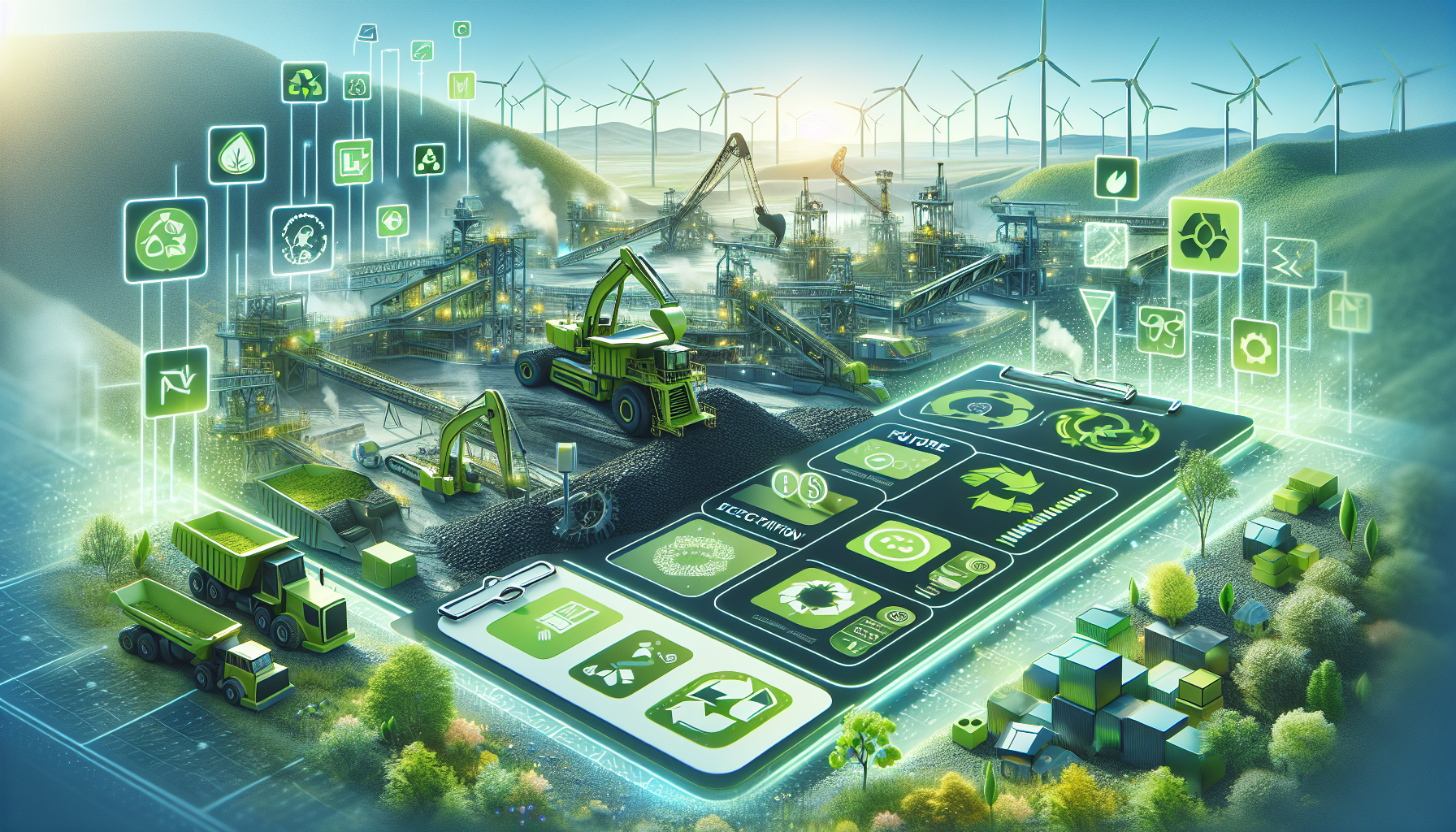
Title: Surface Mining Equipment: Trends, Challenges, and Next-Gen Innovations You Need to Know
Mining has evolved rapidly over the past decade, and surface mining is leading that transformation with cutting-edge machines, smarter processes, and an unprecedented emphasis on sustainability. But beyond the headlines, what’s really going on in the world of surface mining? Whether you’re a curious reader, an industry insider, or just interested in eco-friendly tech, this deep dive into surface mining tools and trends will answer your big questions and maybe unveil a few surprises too.
🔍 Table of Contents
- What Is Surface Mining and Why It Matters
- Key Equipment Used in Surface Mining
- Growing Electrification: Going Green Underground
- Automation & Autonomy: The Age of Driverless Giants
- Case Study: Fortescue’s $220M Bet on Battery Rigs
- The Trolley Truck Debate: Overhyped or Underrated?
- What's Next? Hybrid Machines, AI, and Clean Energy
- Final Thoughts: Innovation Meets Industry
1. What Is Surface Mining and Why It Matters
Surface mining is a technique that removes mineral deposits located just beneath the Earth's surface. Compared to underground mining, it’s more cost-effective, recovers more minerals, and requires fewer man-hours.
But here’s the catch: it’s also more disruptive to the environment. That’s why there’s a major shift underway—rethinking how mining happens with smarter, cleaner equipment at the center.
2. Key Equipment Used in Surface Mining
According to GlobalData’s recent report, over 155,000 machines—including bulldozers, hydraulic shovels, excavators, and massive haul trucks—were in operation at surface mines as of late 2024. That number is projected to hit approx. 171,000 by 2030.
The biggest players?
- 🟡 Caterpillar (leading with ~40% market share)
- 🔵 Komatsu (~20%)
- ⚫ Volvo (~10%)
- 🇮🇳 Tata dominates the APAC market (especially in India)
- 🇷🇺 Belaz is strong in the former Soviet regions
Notably, haul trucks and bulldozers dominate—accounting for nearly 25% of all heavy machines on-site.
3. Growing Electrification: Going Green Underground
Here’s the big news: diesel is on its way out. Not overnight, but the momentum is real.
💡 David Kurtz, GlobalData’s Director of Mining & Construction, notes that diesel usage can contribute up to 40% of a mine’s direct emissions.
To cut back, companies are:
- Electrifying large machines
- Replacing diesel with batteries or cable systems
- Adopting IoT-connected systems for better fuel monitoring
🏗️ Sandvik says it’s leaning into automation AND electrification to build more sustainable drill rigs.
4. Automation & Autonomy: The Age of Driverless Giants
Imagine a 250-ton truck driving itself—all day and night—without a human on board. That’s not sci-fi anymore.
As of late 2024, GlobalData was tracking 2,348 autonomous or autonomy-ready haul trucks in use globally (up from 1,704 in 2023). Australia leads the pack with 942 units, followed by China, Canada, and Chile.
Why go driverless?
✅ Increased productivity (24/7 operation)
✅ Fuel efficiency
✅ Safer work conditions
✅ Centralized control from operations hubs
Liebherr and Epiroc agree: we’re witnessing the next industrial revolution—one line of code at a time.
5. Case Study: Fortescue’s $220M Bet on Battery Rigs
In April 2025, Fortescue (one of the world’s top iron ore miners) made waves with a jaw-dropping order:
🚨 50 cable-electric & battery-electric drill rigs from Epiroc
🌍 For open-pit mines in Western Australia’s Pilbara region
💰 Deal value: Over $220 million
♻️ Expected to cut diesel use by 35 million liters/year
What makes this even cooler? These vehicles will soon run fully autonomously, operated from Perth—1,500 km away.
Now that’s the future of mining.
6. The Trolley Truck Debate: Overhyped or Underrated?
Trolley-assist trucks (which draw electric power directly from overhead cables) are a mixed bag.
🔥 Komatsu recently debuted the world’s first autonomous electric truck powered via a dynamic trolley system.
💬 Still, experts like Amit Kumar from GlobalData point out limitations—trolley systems aren’t ideal for off-grid sites relying on diesel-generated electricity.
Current global stats:
- 🚛 263 trolley-assist trucks in operation (mainly in Zambia and Namibia)
- 🔋 207 battery-electric trucks—seen as more flexible and scalable
While trolley systems can slash GHG emissions by up to 80%, battery trucks are gaining ground for being cleaner, quieter, and easier to deploy.
7. What's Next? Hybrid Machines, AI, and Clean Energy
Looking past 2025, mining giants are fine-tuning hybrid solutions that mix diesel + electric to overcome charging limitations and uptime concerns.
And it doesn’t stop there. Liebherr is pioneering modular machines to suit different global energy environments—be it hydro, solar, or wind.
Additionally, ecosystems are forming around:
- 🌐 IoT & remote diagnostics
- 🤖 AI-assisted route optimization
- 📡 Machine learning-powered predictive maintenance
The goal? Dig deep while minimizing both resources and repercussions.
8. Final Thoughts: Innovation Meets Industry
Surface mining is no longer just about “moving dirt.” It’s about moving forward—smarter, cleaner, and more connected.
From battery-powered behemoths to AI-driven trucks and automation pods that manage mines from cities far away, the industry is proving that even the oldest professions can evolve.
Want to keep up? Look to electrification, autonomy, and sustainable engineering—it’s going to be a wild, energy-efficient ride.
📌 Bonus Tip: Interested in mining? Follow the trail of Caterpillar, Komatsu, and Epiroc as they lead the charge into the next decade of eco-mining.
Let’s keep digging—smarter.
Leave a Reply