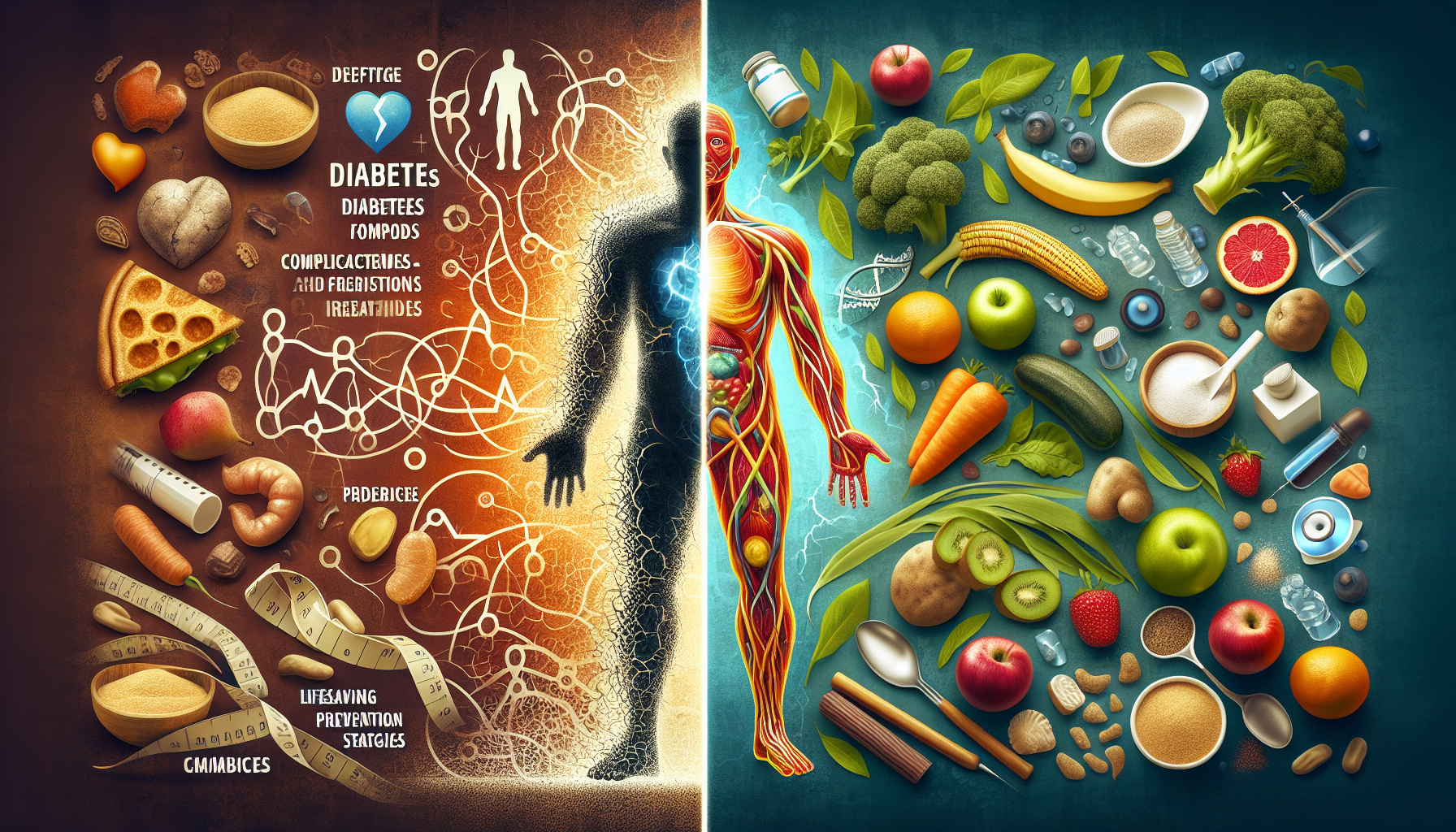
Blog Title: The Hidden Dangers of Diabetes: Complications, Healing Foods, and Prevention Secrets You Need to Know
Living with diabetes is more than just monitoring your blood sugar. It’s about protecting your entire body from a range of potentially fatal complications. Yes, you can live well with diabetes — but only if you understand the silent threats it brings.
Let’s dive into the types of diabetes complications, what you can do to prevent them, and which healing foods best support your journey.
Table of Contents
- What Are Diabetes Complications?
- Acute Diabetes Complications — Know The Warning Signs
- Diabetic Ketoacidosis (DKA)
- Hyperosmolar Hyperglycemic State (HHS)
- Hypoglycemia
- Treating Acute Complications — It’s an Emergency!
- Chronic Diabetes Complications — The Long Game
- Macrovascular Complications
- Microvascular Complications
- Managing Chronic Complications — Early Action is Key
- Foods That Help — Eat Your Way to Better Sugar Control
- Foods That Harm — Common Diet Mistakes
- How to Prevent Diabetes — 5 Daily Habits That Save Lives
1. What Are Diabetes Complications?
Diabetes is often misunderstood as “just high blood sugar.” But that sugar — left unregulated — can poison your body from the inside out. Over time, high glucose levels damage blood vessels, nerves, and organs.
There are two types of complications:
- Acute – sudden and life-threatening
- Chronic – long-term, silent damage that worsens over the years
Let’s begin with the most urgent ones.
2. Acute Diabetes Complications — Know The Warning Signs
When sugar spirals out of control (either too high or too low), your body goes into crisis mode. These are the big three emergencies:
🧪 Diabetic Ketoacidosis (DKA)
Common in Type 1 diabetes, DKA happens when your cells don’t get enough insulin. Instead, your body starts burning fat, releasing toxic acids called ketones.
Warning Signs:
- Fruity-smelling breath
- Nausea or vomiting
- Confusion
- Shortness of breath
- Rapid heartbeat
💡 Case Example: Jane, 26, passed out at a music festival. She thought she was just dehydrated, but doctors found she had DKA and needed ICU care.
🌊 Hyperosmolar Hyperglycemic State (HHS)
Seen mostly in Type 2 diabetics, HHS is extreme dehydration caused by dangerously high blood sugar levels.
Symptoms:
- Dry mouth
- Frequent urination
- Blurry vision
- Weakness
- Mental confusion
Without immediate fluids and insulin, HHS can lead to coma.
⚠️ Hypoglycemia (Low Blood Sugar)
This can be caused by skipping meals, excessive exercise, or medication errors.
Symptoms:
- Sweating
- Shakiness
- Fast pulse
- Confusion
- Blackout
💡 Pro tip: Always carry glucose tablets if you take insulin or sulfonylureas.
3. Treating Acute Complications — It’s an Emergency!
If you suspect DKA, HHS, or hypoglycemia, seek emergency care immediately. Hospital treatments include:
- Intravenous (IV) fluids
- Insulin therapy
- Electrolyte replacement
- Continuous glucose monitoring
Failure to get swift medical attention can lead to permanent damage or even death.
4. Chronic Diabetes Complications — The Long Game
Even if you don't "feel" different, high glucose silently destroys your body. Long-term complications impact your large and small blood vessels, leading to:
Macrovascular (Large Blood Vessel) Complications
These include:
- Heart disease — leading cause of death in diabetics
- Stroke
- Peripheral artery disease — can lead to amputation
💡 Charles, 58, controlled his diabetes for years but skipped heart checkups. A mild chest pain turned out to be a major heart attack.
Microvascular (Small Vessel) Complications
- Diabetic Retinopathy: Damage to eye vessels causing vision distortion or blindness.
- Diabetic Nephropathy: Kidney damage seen in protein-filled "foamy" urine; may require dialysis.
- Diabetic Neuropathy: Nerve damage causing numbness, pain, and sometimes limb loss.
Also affects:
- Digestive function
- Sexual health
- Bladder control
5. Managing Chronic Complications — Your Daily Routine Matters
The best approach is prevention, not reaction. Here’s how to reduce long-term risks:
- Control blood sugar with medication and diet
- Maintain BP and cholesterol levels
- Annual screenings: eyes, kidneys, feet, and heart
- Quit smoking and limit alcohol
- Lower stress through mindfulness or therapy
🩺 Best practice: See your doctor at least every 3–6 months for full assessments.
6. Foods That Help — Eat Your Way to Health
Your plate is a powerful tool.
🥦 Top Diabetes-Friendly Foods:
- Leafy Greens (Spinach, Kale): High fiber and micronutrients
- Fatty Fish (Salmon, Mackerel): Omega-3 boosts vascular health
- Beans & Lentils: Plant-based protein, stabilize blood sugar
- Nuts: Almonds, walnuts reduce LDL cholesterol
- Cinnamon & Garlic: Natural insulin-sensitizers
💡 Meal Idea: Grilled salmon with sautéed spinach and quinoa. Sprinkle cinnamon on Greek yogurt for dessert!
7. Foods That Harm — The Blood Sugar Traps
Think “white and sweet”—your worst enemies.
🍞 Foods to Limit or Avoid:
- White rice, white bread
- Sugary drinks, soda, and fruit juices
- Pastries, candy, ice cream
- Fried foods
- Processed snacks (chips, crackers)
And yes… those cute instant coffee mixes ❌. They’re sugar bombs in disguise.
8. How to Prevent Diabetes — 5 Daily Habits That Save Lives
If you have prediabetes or a family history, start now.
✅ Prevention Tips:
- Maintain a healthy weight
- Exercise at least 30 minutes daily
- Eat a fiber-rich, balanced diet
- Get regular checkups and A1C testing
- Sleep well and manage stress
💡 Bonus Tip: Even walking 10,000 steps a day can lower your diabetes risk by up to 50%.
Final Thoughts
Diabetes isn’t just about sugar — it’s a full-body challenge. But with the right knowledge, lifestyle, and vigilance, you can beat the odds.
Whether you're newly diagnosed, managing a loved one’s care, or preventing it altogether — awareness is your greatest weapon.
🧡 Start today. Eat smart, move more, check often — and live better.
📌 Save this post for future reference.
💬 Got questions about diabetes-friendly recipes or supplements? Drop a comment below!
#DiabetesCare #BloodSugarBalance #DiabeticHealth #HealthyEating #PreventDiabetes #WellnessJourney #DiabetesAwareness
Leave a Reply