Blog Title:
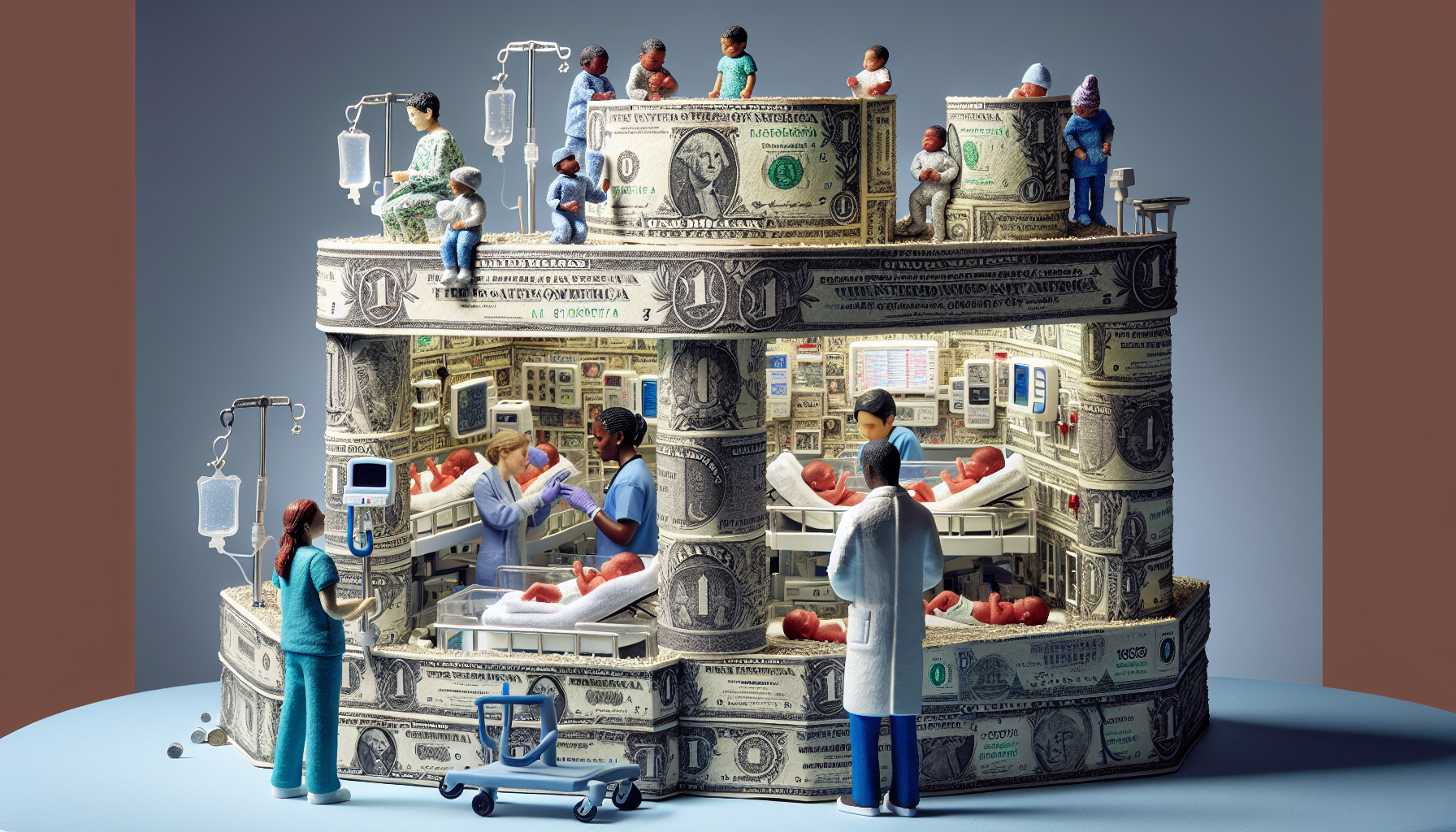
💸 The $4 Million NICU Bill: A Harsh Reality Behind the Cost of Premature Birth in the U.S.
Introduction
What happens when joy turns into financial chaos? That’s exactly what Ohio mom Hannah Castle experienced after giving birth to premature quadruplets. While raising a family is no small feat, raising four babies born early under the watch of America’s healthcare system turned into a multi-million dollar surprise—$4.04 million to be exact.
Let’s dive into how this happened, what it reveals about the U.S. healthcare system, and what parents should prepare for when faced with unexpected medical emergencies.
📌 Table of Contents:
- What Happened to Hannah Castle?
- The True Cost of NICU Care
- How Health Insurance Falls Short
- Not an Isolated Case: More Stories of Medical Debt
- Why the U.S. Healthcare System is So Expensive
- Preparing for the Unexpected: How To Protect Your Family
- Final Thoughts
1. What Happened to Hannah Castle?
In a viral TikTok video, Hannah Castle shared the staggering medical bills she received after her quadruplets were delivered prematurely. Each of her babies—Atlas, Magnolia, Morgan, and Dominic—spent between 64 and 147 days in the Neonatal Intensive Care Unit (NICU).
The result? A combined NICU bill of $4.04 million. One child alone, Morgan, racked up a bill of $976,415.69.
📱 In her own words:
“Take the cost just to stay in the NICU and the 27 pages of god knows what else he needed, and you get this.”
2. The True Cost of NICU Care
Why does it cost so much? NICU care is incredibly resource-intensive:
- 24/7 monitoring
- Specialized medical staff
- Advanced equipment, such as ventilators and feeding tubes
- Constant diagnostics, medications, and imaging
💰 According to Peterson-KFF, newborns admitted to the NICU incur 5 times higher healthcare costs in the first 18–24 months than babies who don’t require it.
And it’s not just about the “sticker price.” The bills reflect negotiated costs between hospitals and insurers—but families still owe deductibles, co-pays, and out-of-network fees.
3. How Health Insurance Falls Short
While many assume insurance will cover the cost, the reality is bleak for most:
🔹 High deductible health plans are now common.
🔸 2021 data shows 55.7% of private-sector workers were enrolled in these, with annual deductibles of $5,000–$6,000.
These hidden costs devastate families. Even if insurance pays 90%, a 10% co-pay on a $1 million bill is still $100,000.
🤯 Many commenters on Hannah’s TikTok shared their horror.
One wrote: “So all in all I just need to go on a vacation in another country around the time I go into labor.”
4. Not an Isolated Case: More Stories of Medical Debt
Unfortunately, Hannah’s story is not unique. Here are a few more real examples that surfaced in response:
👶 A mom of identical twins shared she owes $2 million to a children’s hospital.
💔 One father, Ty Webb, lost his son just two days after birth. The hospital bill? Over $1 million.
According to the KFF Health News report, as of 2022, about 40% of U.S. adults held some form of medical or dental debt—often paid with credit cards, loans, or help from family.
5. Why the U.S. Healthcare System is So Expensive
A 2021 report from the Commonwealth Fund found that pregnancy and delivery complications cost the U.S. $32.3 billion annually. Of that, $13.7 billion was linked to preterm births.
💡 Curious Fact: The average cost of childbirth—even without complications—is $20,416 in the U.S., with about $2,743 coming out-of-pocket even for those with employer-sponsored insurance.
Here’s what drives prices up:
- Fragmented care
- Expensive medical technology
- Administrative overhead
- Negotiation gaps between insurers and hospitals
6. Preparing for the Unexpected: How To Protect Your Family
🛡️ While you can’t predict every emergency, you can take financial steps to shield your family:
✅ Understand your health insurance policy in detail (deductibles, co-pays, out-of-network rules)
✅ Consider opening an HSA (Health Savings Account) if you have a high-deductible plan
✅ Purchase supplemental or maternity insurance (especially if planning a family)
✅ Build an emergency fund
✅ Ask hospitals for detailed itemized bills (sometimes errors can be corrected to reduce charges)
✅ Speak with a medical billing advocate—yes, they exist and can negotiate on your behalf
7. Final Thoughts
Hannah Castle’s story is shocking—but not rare in today’s American healthcare system. As joyful as bringing new life into the world is, it can come with a price tag that lingers for decades.
Let her story be more than a viral sensation. Let it serve as a wake-up call—for reform, for better policy, and for preparedness.
Whether you're planning for a family or just want to be more informed, these financial and medical realities matter.
💬 Have you or someone you know faced overwhelming medical bills? Share your story in the comments to raise awareness!
📢 Want more real financial stories and healthcare tips? Don’t forget to subscribe for weekly insights on navigating life’s expensive surprises.
#healthcare #babies #NICU #medicaldebt #parentingtips #financialwellness #ushealthcare #prematurebirth #insurance
Written by: ✍️ A decade-proven blog strategist in health, family, and personal finance
Sources: Yahoo News | Benzinga | Commonwealth Fund | KFF | Peterson-KFF
Leave a Reply