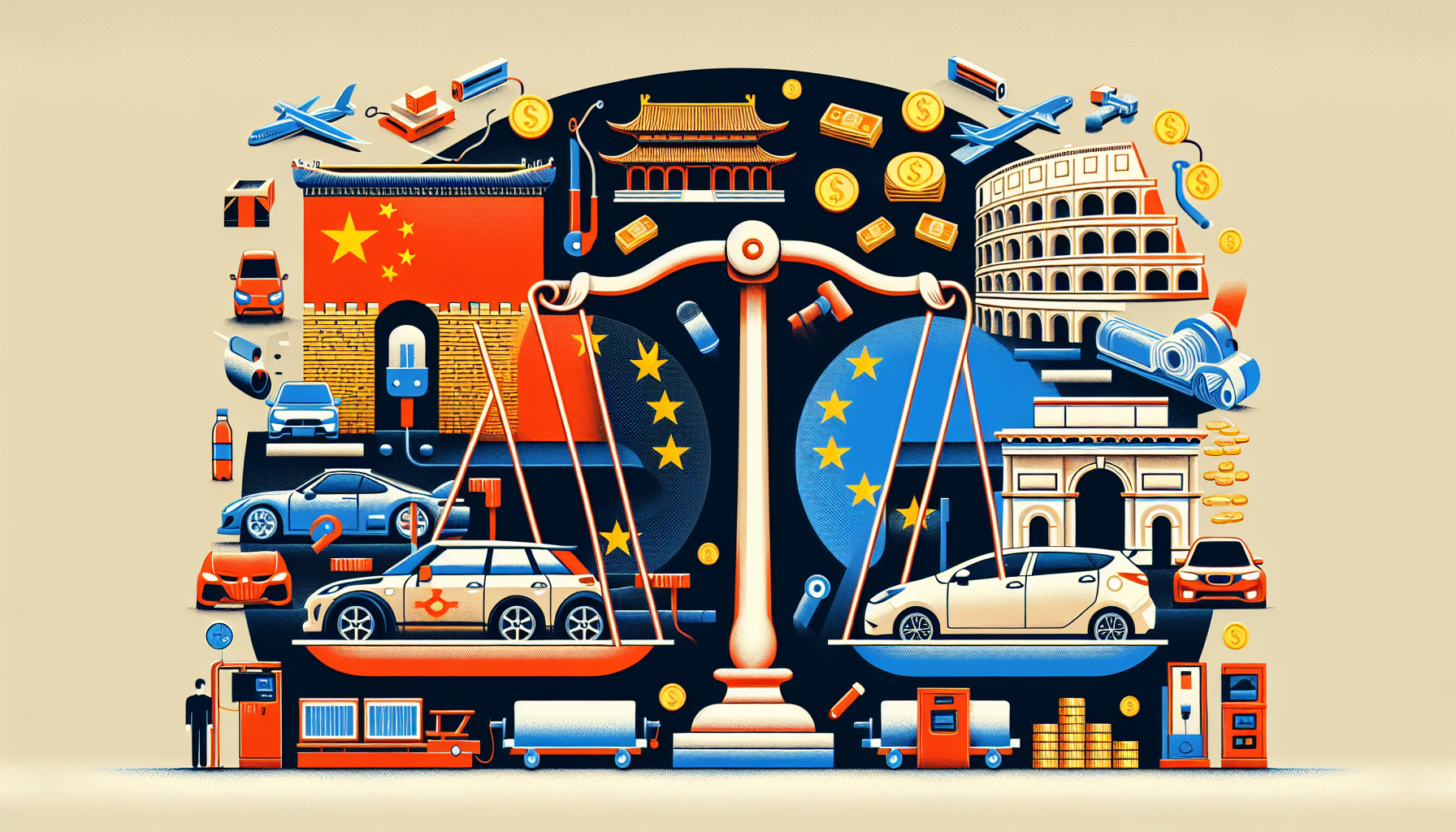
China-EU EV Tariff Talks Resume: What It Means for Global Trade and Markets
The world of electric vehicles (EVs) is not just about technological innovation anymore—it’s turning into a battlefield of trade negotiations and strategic diplomacy. The latest development? China and the European Union have officially resumed discussions over a minimum price plan aimed at avoiding steep tariffs on Chinese-made electric vehicles. Let’s unpack what’s happening, why it matters, and what to expect next.
🔍 Table of Contents:
- The Background: Why the EU Imposed Tariffs
- What Is the “Minimum Price” Plan?
- Why the Stakes Are High for China
- Implications for Global Trade & Auto Industry
- Investor Takeaways: What to Watch
1. The Background: Why the EU Imposed Tariffs in the First Place
In October 2024, the European Commission approved punitive duties of up to 45.3% on Chinese EVs. The reasoning? European regulators suspect Chinese EV manufacturers are receiving "unfair subsidies" from the government, allowing them to flood the market with cheaper vehicles.
This, the Commission argues, could distort competition in the EU market and potentially put local carmakers like Volkswagen, BMW, and Renault under immense pressure—especially as the transition to green mobility accelerates.
⚡ Example: BYD, one of China’s largest EV makers, sells models in Europe at significantly lower prices than comparable European cars, a competitive gap attributed to Beijing’s aggressive industrial policy.
2. What Is the “Minimum Price” Plan?
To prevent a tariff war, China has countered with a proposal: a minimum price plan.
🛠 What does that mean?
A minimum export price agreement (also known as a “price undertaking”) prevents exporters from selling products below an agreed-upon price threshold. It’s typically used in commodities like steel or semiconductors—but applying it to complex goods like EVs is new territory.
👉 China wants to avoid the tariffs by offering a deal that would fix a floor price for EVs exported to Europe, thereby ensuring local markets aren’t "dumped" with ultra-cheap vehicles.
💬 According to China's spokesperson He Yadong, specific terms of the renewed talks have remained undisclosed, but negotiations would continue into the following week.
3. Why the Stakes Are High for China
The EU is a crucial export market for Chinese automakers.
📉 Domestic Challenges:
- China’s domestic EV market is saturated.
- Price wars at home are shrinking profit margins.
- Deflationary pressures are squeezing automakers.
🌍 Therefore, Europe is seen as a growth engine, and additional tariffs would make Chinese EVs far less competitive.
A minimum-price deal could serve as a lifeline to preserve market access without having to over-subsidize or pull out entirely.
📌 Fun Fact: China became the world’s largest auto exporter in 2023, with electric vehicles making up an increasing portion. Without the EU, maintaining that lead becomes much more difficult.
4. Implications for Global Trade & Auto Industry
🟠⚫ Risks of a Trade War
If talks fall apart, we're looking at a potential tit-for-tat tariff escalation. That’s not just bad news for automakers—it could ripple across sectors from batteries to rare earths to AI-powered driving technology.
🛻 Shift in Global Auto Dynamics
A resolution here could reshape the structure of global EV trade. If a floor price is accepted:
- EU automakers might get a breather.
- Chinese brands may raise prices but retain market share.
- Other countries (e.g., U.S., India) may follow similar models for market regulation.
🏢 Business Case Example:
Volkswagen and Volvo have already scaled up their EV divisions to compete with rising imports. A finalized pricing deal could either support their domestic R&D or delay their innovation curve if market competition is softened.
5. Investor Takeaways: What to Watch
📈 For EV Investors:
- Stock prices of Chinese EV makers (Nio, BYD, XPeng) might see relief rallies if a deal is struck.
- European legacy automakers could stabilize on confirmation of price protections.
📊 For Market Analysts:
- Monitor updates in EU regulatory policy and Chinese trade speeches.
- Cross-check global commodity flows (like lithium, cobalt) for emerging cost implications.
🚨 Risk Radar:
- An abrupt end to negotiations could cause volatility in auto manufacturing stocks.
- Long-term fragmentation of EV markets if regional trade blocs create isolated standards/pricing schemes.
🧠 Final Thoughts
The China-EU EV pricing negotiations aren’t just about cars—they’re about the future of industrial policy, fair trade, and access to innovation. For investors and businesses alike, staying informed on these talks is not optional—it’s essential.
Will diplomacy prevail over protectionism? We’ll be watching.
🗓 Stay tuned for updates as negotiations proceed into next week.
👉 If you're investing or trading within the EV ecosystem, bookmark this blog and subscribe to stay ahead of key policy changes!
🔔 Got thoughts on this? Drop your comments or join the conversation on LinkedIn and Twitter!
#EVMarket #ChinaEUTrade #ElectricVehicles #TariffWar #GlobalTrade #AutomotiveIndustry #InvestingNews #EVStocks #BYD #Volkswagen #GreenEconomy #Macroeconomics
Leave a Reply