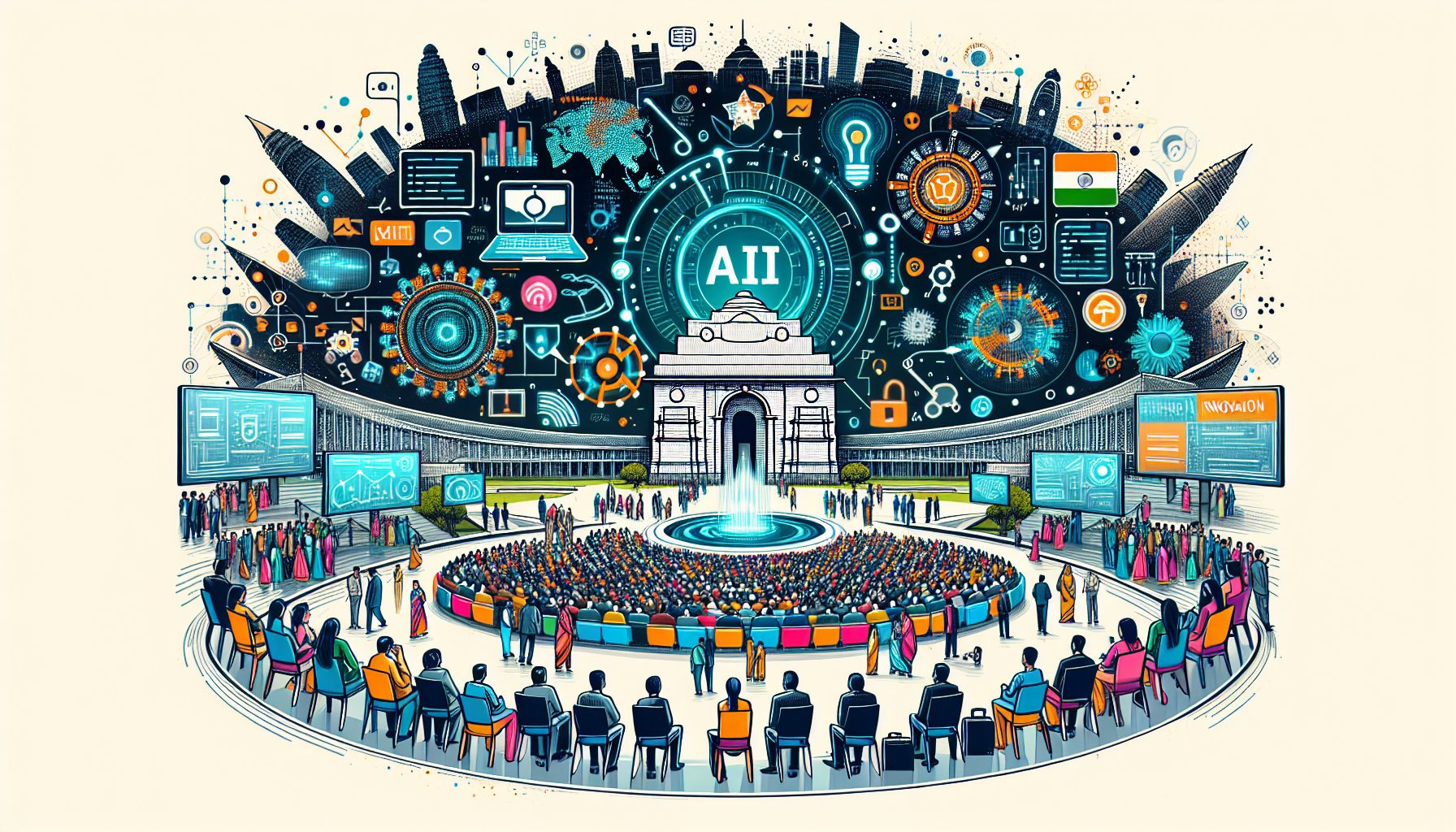
Unveiling the Future of AI: Insights from the AI Impact Summit in India
In a digitally evolving world, the AI Impact Summit, recently held in New Delhi, marked a turning point in global discussions on the future of Artificial Intelligence. On this prestigious platform, notable figures such as OpenAI's Sam Altman, Anthropic's Dario Amodei, Google DeepMind's Demis Hassabis, and Microsoft’s Brad Smith converged to unveil their visions and concerns. Below are key takeaways that could shape AI’s trajectory in the coming years.
1. Bridging the 'AI Divide'
Google CEO Sundar Pichai emphasized the risk of a burgeoning "AI divide," paralleling it with the digital divide. He advocates for expanding access to computing infrastructure and technology training to prevent technological inequities. As AI continues to reform economies, its power must be harnessed to provide equitable growth. Drawing on examples like AI-driven global health improvements, Pichai stressed the importance of government roles not just as regulators but actively participating in innovation.
2. AI's Potential: The Industrial Revolution 10x
Demis Hassabis of Google DeepMind depicted AI’s potential impact as tenfold that of the Industrial Revolution but over a much shorter time frame. With AI’s rapid pace likened to events like the discovery of electricity, Hassabis encourages a scientific approach to understanding and utilizing AI responsibly. This reflects in current global initiatives in AI policy making, where nations strive to balance innovation with ethical standards.
3. The Call for an 'IAEA for AI'
Sam Altman of OpenAI introduced the need for an international governance body for AI, akin to the International Atomic Energy Agency. As AI technologies proliferate, shaping global dynamics and posing complex risks, the establishment of such a body stands crucial. Altman points out that collective efforts are essential to manage potential threats like advanced bio-models, underscoring a moral responsibility towards future generations.
4. Overcoming Barriers to Smart Robotics
Yann LeCun highlighted the paradox of AI: advanced systems excel in passing exams but lag in developing smart robotics. The missing piece, according to LeCun, involves building robust world models that can enable AI to autonomously perceive and interact with their environments, just like humans and animals do naturally.
5. Making AI Multilingual
As AI expands its reach, Microsoft's Brad Smith spotlighted the necessity of crafting AI solutions accessible in every language. This requires deliberate planning and developing resources that address linguistic diversity, essential for solving pressing issues in the Global South. The push for localized AI solutions reflects efforts in enhancing agricultural efficiency in India and tackling food security challenges in Africa.
Conclusion
The AI Impact Summit served as a convergence of visionary ideas and shared responsibilities in shaping the future of AI. As technologies advance, fostering collaborations and equitable access remains pivotal in leveraging AI's power positively. The discussions here not only lay groundwork for future policies but also ignite a global conversation about AI ethics and applications.
As we move forward, continuous dialogues and partnerships will be vital in ensuring that AI serves as a tool for universal empowerment, breaking down barriers rather than erecting new ones. The insights from this summit highlight that while AI holds transformative potential, its success hinges on how inclusively and ethically it is integrated into the fabric of global society.
Leave a Reply