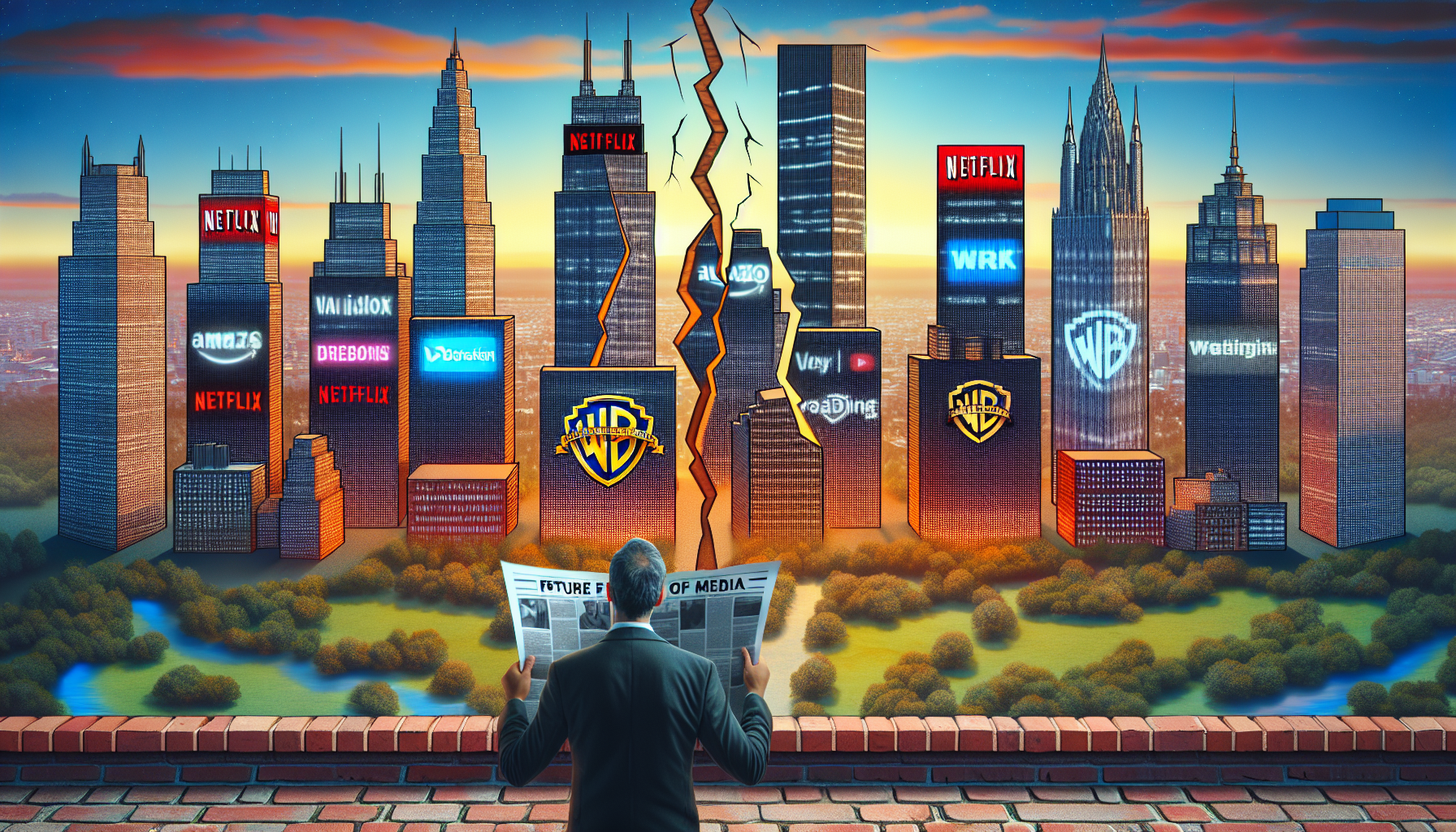
Title: HBO and CNN Split: What It Means for Streaming, Stockholders — and the Future of Media Giants
In the ever-evolving world of media and streaming, another shake-up is grabbing headlines — Warner Bros. Discovery is officially splitting up its sprawling empire. With CNN and other cable heavyweights going one way, and HBO and its robust streaming arm going another, this move has investors and entertainment fans alike watching closely.
But what does this mean for consumers, shareholders, and the future of streaming content?
Let's dive in.
📌 Table of Contents
- What’s Happening? A Quick Breakdown
- Why Warner Bros. Discovery is Splitting
- HBO vs. CNN: How the Divide Works
- Financial Implications: Winners and Risks
- What It Means for Streaming Wars
- Should You Consider Investing?
- Final Thoughts
1. What’s Happening? A Quick Breakdown
In a move that’s been rumored for months, Warner Bros. Discovery is dividing itself into two independent businesses:
🔹 Warner Bros. Global Networks – Think cable news and traditional channels like CNN, Discovery, TLC, and Food Network.
🔹 Warner Bros. Studios & Streaming – Home to HBO, DC Entertainment, Warner Bros. Pictures, and the Max streaming platform.
The goal? To unlock the full value of each business and respond more nimbly to market demands.
2. Why Warner Bros. Discovery is Splitting
Since Warner Media and Discovery merged back in 2022 to form a $25 billion megacompany, things haven’t quite gone according to plan. Stock has dipped over 60%. Consumer habits have shifted. Shareholders are increasingly vocal.
Last week, over 60% of investors voted against executive compensation packages, signaling deep frustrations about leadership and growth.
💡 Just like a company with high blood sugar must manage symptoms to prevent chronic illness (think: diabetes and its complications), Warner Bros. Discovery needs structural change to prevent long-term financial damage.
3. HBO vs. CNN: How the Divide Works
Let’s take a look at what each new entity will focus on.
🟠 Warner Bros. Global Networks (CNN side)
Will carry the bulk of the debt — estimated at $38 billion
Generates most of current cash flow
Includes CNN, Discovery, Food Network, TLC
Needs to “milk the cash cow” model for as long as possible through strong financial management
🔵 Warner Bros. Studios & Streaming (HBO side)
Growth-oriented and content-focused
Will be led by CEO David Zaslav
Includes Max, HBO Originals (e.g., "Succession", "The Gilded Age"), Warner Bros. movies, DC franchises
📈 The HBO side is aiming to be Netflix 2.0: nimble, direct-to-consumer, and globally competitive.
4. Financial Implications: Who Wins?
For investors, this raises the golden question: Which business will thrive?
Just like diabetes has acute (short-term) and chronic (long-lasting) complications, the financial risks here are twofold:
- The CNN side may bring immediate revenue, but it’s seen as the “legacy” operation with declining cable viewership.
- The HBO side is high-growth, but comes with increased content costs and stiff competition from Netflix, Disney+, Apple TV+, and more.
Case in point: HBO Max brings in about $12 per user in the U.S., while Netflix averages $17 per user. There’s still ground to cover.
💬 “The idea of HBO unleashed… the story could cause that stock to do great things initially that hurt the long-term performance," says financial analyst Jason Hall.
5. What This Means for the Streaming Wars
Netflix and YouTube are giants. But with over 120 million subscribers, the HBO side of the business could be a serious contender — if it plays its cards right.
Other competitors include:
- ✅ Disney: Potential for total consolidation success with massive content libraries and brand power.
- ✅ Amazon: Uses Prime Video as a perk, not a profit center — playing a different game entirely.
- ✅ Apple: Takes a “HBO circa early 2000s” approach — fewer shows, higher quality.
The split is a chance for Warner Bros. to laser-focus on each target demographic without being weighed down by internal competition.
6. Should You Consider Investing?
Like the early symptoms of diabetes, the signs have been there — mixed leadership, unclear strategy, and debt overload.
But spin-offs have historically surprised investors. As Joel Greenblatt, author of "You Can Be a Stock Market Genius," noted: “Sometimes, the ugly duckling ends up being the golden goose.”
🧠 Tip: Wait and assess after a few quarters of independent operations. See which company manages its debt, content strategy, and subscriber growth more effectively before jumping in.
7. Final Thoughts
This split is not merely a symbolic reshuffle — it’s a high-stakes treatment plan for two very different illnesses in the media world: outdated legacy systems and aggressive streaming competition.
⚠️ Think of it like diabetes management. Without strategic, disciplined planning, complications (financial or otherwise) may follow. But with smart structuring, realignment, and innovation, there’s room for long-term growth and greater health.
Let’s hope Warner Bros. isn’t just reorganizing the medicine cabinet — but actually taking the medicine.
💬 What do you think? Will HBO thrive as a stand-alone streamer? Or will the legacy network business surprise us all?
Drop your thoughts in the comments below 👇
📩 Don’t miss out — subscribe to our newsletter for future insights on media & tech investing.
—
Written by: [YourName],
Digital Media & Health Finance Blogger
Helping You Navigate Content, Cash Flow, and Cold Truths
#HBO #CNN #StreamingWars #Netflix #MediaSplit #InvestmentTips #WarnerBros #FinancialWellness #SpinOffStrategy #ContentIsKing
Leave a Reply